This is part eight in a blog series on my 15-year journey to better health. Want to start from the beginning? Click here to read part one.
Yes, the pain is real, but it’s caused in your brain.”
— Dr. Tor Wager, Neuroscientist
As I noted at the end of my last post, after hitting a dead end at the Mayo Clinic in Rochester, Minnesota, and feeling like I was never going to get help with my leg and hip pain—or any of my other issues for that matter–I happened upon a podcast called Like Mind, Like Body. After leaving that hugely disappointing follow-up (no answers, nowhere left to seek help), the pain in my leg was roaring. But by merely listening to this podcast for the full two hour drive home, the pain in my leg was significantly reduced.
In this post, I’ll discuss the three episodes that had the most impact on me that first day, and what I learned from them. I’ll share how continuing to listen to the podcast, and using the same organization’s app helped me reduce my pain by 80%, bringing me back to a state where I could live life again, and not feel possessed by my pain.
Starting from the beginning, I listened to episode one, where Dr David Clarke talks about the long-term impact of Child Adversity on health, and what he came to call ‘stress illness’ in his book titled: They Can’t Find Anything Wrong. As you can imagine, the book title alone resonated with me!
Dr. Clarke discusses the patient who first set him on this path—a woman with years of severe GI issues, who his clinic couldn’t figure out how to help. In his final meeting with her, he asked her if she had any stress in her life, which led to her confessing that she’d been molested as a child. He ended up referring her to a psycho-therapist in the clinic, and finding out some time later from the therapist that the patient was completely cured.
He followed up with the therapist to learn more about her case, thinking he’d maybe see five or six cases like this per year, and even if only rarely applicable, he wanted to have this treatment option in his repertoire. But upon learning more, he realized it applied to five or six cases per week!
Now, I didn’t experience any extreme childhood trauma like molestation—I had a good childhood, and my parents did their best. But through therapy I had come to realize that my childhood had negatively impacted my emotional health, and I continued to struggle with intermittent GI issues, so I figured I should at least keep listening. Later in the episode Dr Clarke called out that these childhood experiences often breed specific adult behaviors such as being detail-oriented or perfectionistic, which described me to a T.
If you have repressed or improperly processed emotions, and you don’t consciously address them, they will come out through your body.
Dr Clarke’s main point in the episode was that if you have repressed or improperly processed emotions, and you don’t consciously address them, they will come out through your body. He felt that 99% of people likely experience some aspect of this, and it manifests in different ways for different people, through anxiety or migraines, GI issues or back pain, pelvic pain or something else entirely.
The next episode that stuck with me was with Dr Tor Wager, a neuroscientist, who went deeper into the science behind the role the brain plays in pain.
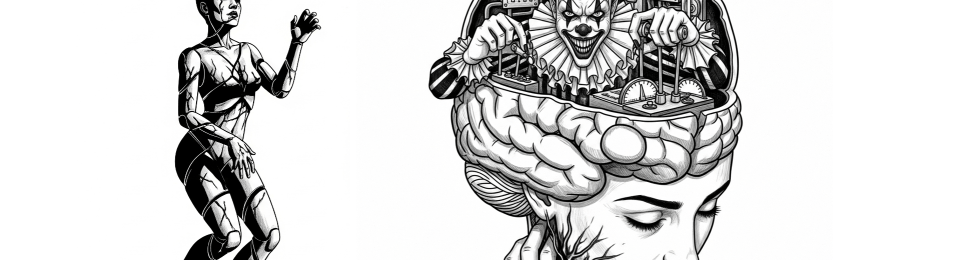
He explained how experiencing pain is a two-step process. Step one is when a part of the body sends a message to the brain about how things are feeling, and step two is where the brain decides how to interpret and respond to that message. He added that your brain’s environmental context (e.g., “Am I safe? Am I okay?”) greatly influences how your brain chooses to interpret those bodily messages. In other words, if you are feeling scared, or stressed, or otherwise not safe, your brain will essentially turn up the volume on signals from the body, which can result in more pain. He noted that this bodily impact from emotions is no different than when psychological stress makes your heart rate increase.
If you are feeling scared, or stressed, or otherwise not safe, your brain will essentially turn up the volume on signals from the body, which can result in more pain.
Dr Wager cites the placebo affect as another great example of this connection. If you aren’t aware, giving a patient a placebo (where they believe they’re getting treatment but actually aren’t) has been documented to have a shockingly positive effect—leading to between 20% and 60% improvement in patient outcomes. He says that this proves how thoughts and the brain’s context can impact a person’s physical health.
He also goes into the science of how the brain is in charge of releasing chemicals in your body that help with mitigating pain; internal opioids—similar to morphine and oxycodone typically prescribed by doctors. And when the nervous system calms, the brain can also release oxytocin and serotonin, which are mood elevating hormones. Placebos can trigger this process, which is the best outcome we can hope for: the body healing itself. But when the brain perceives a lack of safety, it releases adrenaline, cortisol, and histamine—which lead to more stress, anxiety and pain (not to mention tight muscles).
This episode was extremely impactful to me, as I knew I’d never managed stress or situations with high emotions very well. And I had noticed over time that my pain was usually worse in periods of high stress. For example, when I was being challenged on my performance at my first hands-on engineering job, and my leg pain was so bad that I had to bring an ice pack to work each day. Or when my leg pain got worse after leaving my appointment at Mayo, as I feared that I would never figure it out. This completely explained the science of why that was happening—in both cases, I didn’t feel safe.
The last episode that stood out to me that first day was with Dr David Hanscom, a spine surgeon. It started with some shocking statistics: first, the overall success rate for spine surgeries leading to positive patient outcomes is only 22-24%; and second, in 40-60% of surgeries, patients actually end up with worse pain after the procedure.
Experiences in his own practice led Dr. Hanscom to the realization that the structural condition of the back had no correlation with back pain. That disc degeneration, arthritis, bone spurs, bulging discs, herniated discs, and ruptured discs can exist and not create pain, and vice versa. Similarly, in the episode with Dr Wager, he mentioned that if you were to scan random people across the general population, you will find that many of them have terrible structural issues in their backs, but no pain.
While Dr Hanscom was clear that there are times where a structural issue can occur and be resolved with surgery, he noted that in these cases there is typically only acute pain, and the source can be confirmed with things like injections before surgery. But if a patient comes in with chronic pain, it is much more likely that it is muscular in nature. Overall, he believes that approximately 70% of spine surgeries shouldn’t be done.
What was most surprising in the episode was when Dr Hanscom explained how he then went into trying to understand what did lead to positive outcomes in back surgery. Through his following years of practice and research, he found that lifestyle aspects such as inadequate sleep, high stress, out-of-control medications, an inflammatory diet, and a negative outlook on life led to high chances of a negative post-surgery outcome.
Aspects such as inadequate sleep, high stress, out-of-control medications, an inflammatory diet, and a negative outlook on life led to high chances of a negative post-surgery outcome.
When he used this information to design a “pre-hab” program for his patients—requiring them to focus on and improve these aspects before he’d proceed with surgery, many of them came back for their final pre-surgery meeting reporting that their pain was gone, and they no longer needed the surgery. This, of course, devastated his practice (being that he was a back surgeon) but he shared that it brought him great joy to help people heal, even if it wasn’t in the way he originally imagined. Not only did his pre-hab program resolve pain, but it resolved stress and anxiety in many of his patients as well.
One other interesting thing Dr Hanscom shared was that in trying to help people sleep better—one of the most common lifestyle challenges he encountered, he began recommending that patients do expressive writing and active meditation before bed. In connecting this information with that in the other episodes shared above, it’s clear how these tactics could address bottled up emotions, calm the nervous system, and help the brain to shift it’s environmental context back to ‘safety.’
Chronic pain (or anxiety or stress) is a neurological issue. Once a person learns how to reset the brain’s context and reprogram its response, it improves the chemistry in the body, which reduces the pain (or stress or anxiety), which improves the person’s life, and makes the cycle less likely to repeat.
Dr Hanscom stated that chronic pain (or anxiety or stress) is a neurological issue. Once a person learns how to reset the brain’s context and reprogram its response, it improves the chemistry in the body, which reduces the pain (or stress or anxiety), which improves the person’s life, and makes the cycle less likely to repeat.
A Consistent 80% Reduction in Pain
After three months of listening to Like Mind, Like Body (which is FREE!), as well as doing some work in the same organization’s Curable app, I was able to eliminate 80% of my pain. I want to be clear—this wasn’t a miracle cure that erased all my pain. For example, the pelvic pain that I started having with each ovulation was untouched. And I did still occasionally struggle with leg and hip pain.
But where my days used to range from a 3-8 in pain level, they now ranged from a 0-3. This major shift changed everything for me. I had forgotten what it was like to go through a full day without pain. It eliminated my impatience and reduced my anxiety, and it allowed me to get back to living life, versus spending most of my time laser focused on where the heck the pain was coming from.
The most remarkable improvement for me was that I gained control over my pain.
And as if that wasn’t enough progress, the most remarkable improvement was that I gained control over my pain. Not just the pain in my leg—which was the most frequent—but also the intermittent pain I had started experiencing in my arm. Now when my pain starts to rear it’s ugly head, I go back to what I’ve learned: journaling and processing emotions that I now know need to be dealt with, and focusing on reprogramming my brain’s response, reminding it that I’m safe and okay.
One of the most impactful practices I learned from the Curable app was to touch the part of your body that’s experiencing pain, to look directly at it, to see that it is okay and not injured, and to visualize turning down that volume dial, all the while telling your brain that your body is okay and you are safe. I know it sounds crazy, but it works to trigger a shift in how your brain is interpreting body signals, and a change then in chemical releases.
Another amazing practice I learned was that if there’s an activity you fear you cannot do without experiencing pain, you should be still in a safe place with your eyes closed and visualize doing it. And if you start to feel pain during this process, that pain is 100% from your brain. Just the act of the opening your eyes and proving to your brain that you are okay and safe will start to deprogram that response. This helped me tremendously with riding in the car, as I’d gotten to the point where long car rides were excruciating, but after repeating this visualization practice, I no longer had pain during car rides.
If you’ve gotten this far, thank you for reading. I hope this information helps even one person as much as it helped me.
Please stick around for my next post, where I’ll share the third and greatest breakthrough in my journey to wellbeing!
 Chasing Wellbeing