Tags
anxiety, chronic-illness, chronic-pain, functionalmedicine, health, life, mental-health, mindbodyconnection, pelvic-pain
NOTE: This is part 7 in a blog series on my 15-year journey to better health. Want to start from the beginning? Click here to start with part one.
I was crushed to realize that discovering Pelvic Venous Insufficiency wasn’t the ultimate answer to my ongoing struggles—especially the relentless leg and hip pain. In this post, I’ll share more challenges and failed attempts to uncover the cause, and finally introduce another discovery that led to improvement.
The path to success is not a straight line, but a journey through waves and tides. It’s up to us to steer the course.”
—Jeff Ocaya
Although I continued to feel more energetic after the surgery, the leg and hip pain hadn’t improved like I’d hoped. In fact, it continued to ebb from a pain level of 2 or 3 to as high as 7 or 8, but always there, with no reprieve. As mentioned before, my left leg muscles would lock up, and I had a burning fiery pain from the top of my glute all the way down to my foot. It continued to heavily affect my plans, and it affected my mood as well.
I vividly remember not being able to handle a car ride longer than 20 minutes, as just sitting now triggered a flare-up. If I had to endure a longer ride, I needed to bring a tennis ball with me to sit on, which provided at least some level of improvement. The constant pain left me anxious, on edge, and prone to angry outbursts. But with my improved energy, I at least had the gusto to aggressively seek more answers.
Back to the Vascular Surgeon
A few months after my pelvic vein surgery, I went back to my Vascular Radiologist to make sure my veins weren’t still causing problems. He gave me another round of images—a CT and venogram to see how things were looking post-surgery. Fortunately or unfortunately, he informed me that everything looked better now.
While I did still have some prominent uterine veins, he confirmed I didn’t have any compressions (kinks preventing proper blood flow), and that my flow was now working as it should. He didn’t see any vascular issues that could be the cause of my pain. He also said he didn’t think any kind of pelvic therapy would help, which unfortunately would negatively affect my decisions later and my path to recovery.
Back to the Spine Doctor
Since the vascular route was now a dead end, I went back to my second spine doctor. He had previously suspected SI joint dysfunction, but I hadn’t yet tried a steroid shot to test that theory, so he recommended that, if for no other reason that to rule it out as the cause.
I saw the same tech for the SI steroid shot as I saw for the steroid shot I’d had previously in my lower spine. She reiterated that my hips looked misaligned and recommended I see a women’s pelvic health specialist. I again noted the names she recommended, but really hoped the shot would make some improvement.
Trying Pelvic Therapy
When the SI joint steroid shot did nothing for my pain, I did reach out and make an appointment with one of the women’s alignment and pelvic therapy contacts from the shot technician. The only contact she gave me with availability was located far from home. And after a few sessions with little-to-no progress, and my vascular doctor’s words about pelvic therapy not being something that will help bouncing around in my head, I gave up this route as well. In hindsight, this was another costly mistake—one that delayed identifying another core issue for me for more years.
Other Unexplained Issues
On top of the leg pain, and the increasing episodes of pelvic pain, I’d had a few other weird situations continue to unfold. I had two extended episodes of chest pain that landed me in the ER, only to be told once again that nothing was wrong.
I also had a horrible episode of pain in my right hand and arm. It started in my wrist, which I assumed might be carpal tunnel. But after wearing a brace for a few days, it travelled up my arm, getting so painful I ended up at home, bawling on the couch, not knowing what to do. After visiting a doctor for this new pain, I was sent once again to PT. And since the PT did resolve the pain in my hand and arm, I didn’t give it much more thought. Looking back on these two episodes, however, I realize now that they were indicators of something bigger going on in my body.
One Last Attempt
In a desperate Hail Mary attempt, I searched online to see if I could get an appointment at Mayo Clinic in Rochester, which was thankfully only a few hours from my home. In November of 2019, just three months after my vascular surgery, I was elated to find out that a spine doctor at Mayo had accepted my request! The initial consult only made me more excited. The doctor I met with said that it’s no wonder I didn’t know what was going on with my hip, leg, and pelvis—there was a barrage of tests I’d never undergone—and a lot of missing information as a result.
As Mayo does so well, I went through an intensely coordinated day of tests—from blood tests to another vascular consult, from an EMG (a very long and painful nerve function test) to a pelvic MRI, and more.
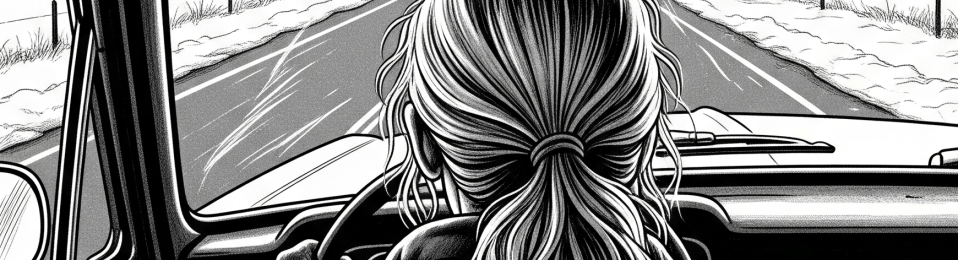
It was a few days before Christmas that I went back to the spine doctor to discuss the results. As I drove down to Rochester, I remember being taken aback by the beauty of the freshly fallen snow across the peaceful farm fields and clusters of trees… I was so full of hope, I knew this would bring me answers.
After a 20 or so minute wait in the lobby, my follow up appointment with the Mayo spine doctor lasted under 5 minutes. He started with the bottom line: all my tests came back normal. He did not find anything wrong. Although he said more, at this point I think I went into some kind of shock and his words started to sound like they were coming from the other end of a tunnel filled with water. The only other phrase I remember him saying specifically was: “some people just have unexplained chronic pain.” He referred me to their chronic pain clinic as he swiftly ushered me out.
I got back into my car and started on the drive home, but I only made it a few blocks before bursting into tears. I pulled over in some parking lot and called my husband to tell him what had happened. He tried his best to comfort me, to encourage me that we’ll figure it out eventually, but I was inconsolable. After we hung up, I just sat there for a long time thinking: I can’t do this anymore. As I drove, I found myself having dark thoughts—each bridge I crossed stirred a painful, fleeting temptation to give up entirely.
I believed Mayo Clinic—renowned worldwide for solving medical mysteries—would finally give me the answers I so desperately needed. But they too had none…
I consider myself to be one of the most persistent and determined people, but in this moment, I was broken by the responses I’d gotten in traditional medicine. I felt like I’d fought as hard as I could to find answers, and went round after round of defeat continuing to get up each time to fight again. I believed Mayo Clinic—renowned worldwide for solving medical mysteries—would finally give me the answers I so desperately needed. But they too had none, and thus I felt there were no more fights left—I guess I will just lay down and succumb to this miserable existence.
A Spark of Hope
About 45 minutes into my drive home, the last thing the Mayo doctor said to me popped into my head again: “some people just have unexplained chronic pain.” With a spark of hope, I pulled over again and dragged myself out of the mental ditch of despair. I began searching online for podcasts related to chronic pain. Even though it went against everything I’d learned in the field of software development, maybe I would never get to find the root cause of my issues. But, maybe, I could get better at managing the pain. Maybe that would be the way to make things tolerable.
After starting and stopping a few podcast series, I found Like Mind, Like Body. The podcast instantly resonated with me. Hosted by a woman who had unexplained chronic pain, one of the first episodes is her talking about how she came to realize that the pain stemmed from her brain misinterpreting bodily signals—shaped by past trauma and emotional stress. And how this issue then spiraled into the brain mismanaging the body’s responses, which had a cascading negative effect. Further episodes in the podcast went on to interview experts in the medical field (neurologists, back surgeons, etc.) all coming to realize this same phenomenon in their own ways.
Since I’d had my fair share of past emotional struggles and trauma, I thought there could be something here for me, so I kept listening. The most shocking part was, my leg pain decreased significantly by the time I got home, and this was just from listening. It showed me that—even if it wasn’t the full story—my brain’s role in interpreting pain was a crucial piece of the puzzle for me, and I needed to learn more.
In my next post, I’ll dive deeper into what I learned from this podcast—and how it helped me take another large step forward on my journey to health.
 Chasing Wellbeing